Indian Red Cross Society
Kallakurichi District


05-11-2026
Villupuram
Training Camp
The Indian Red Cross Society, Kallakurichi District Branch, held a disaster management training programme for police personnel on 5 November 2026. The session ran from 10:00 a.m. to 12 noon at the Police In-service Training Centre, Kolliyankunam, Villupuram.
The goal was to help police personnel respond faster and more safely during disasters and emergencies. Police are often the first on the scene when floods, cyclones, accidents or other disasters happen, so this training is very useful.
In a disaster, the first few minutes decide who lives and who does not. Trained responders can:
Stay calm and take quick decisions
Give first aid before medical teams arrive
Help many injured people in the right order
Work well with other rescue teams
Keep themselves and the public safe
The session was led by Lion G. Janakiraman, MSc, MEd, MPhil, a State General Body Member of the Indian Red Cross Society. It was held under the guidance of the District Chairman, Dr. S. Ponnarasu MD. Mr. Janakiraman used simple slides and live demonstrations to explain each topic.
The training covered these key topics:
Understanding disasters and risks: the types of disasters and how to spot danger early.
Emergency response and first aid: the basic steps to take at once to help an injured person.
Mass casualty management: how to act when many people are hurt at the same time.
Triage and prioritising casualties: how to decide who needs help first.
Coordination and communication: how to work with other teams and share clear information.
Safety measures for responders and the public: how to protect everyone at the scene.
Triage means sorting injured people by how urgent their condition is. The goal is to do the greatest good for the greatest number of people.
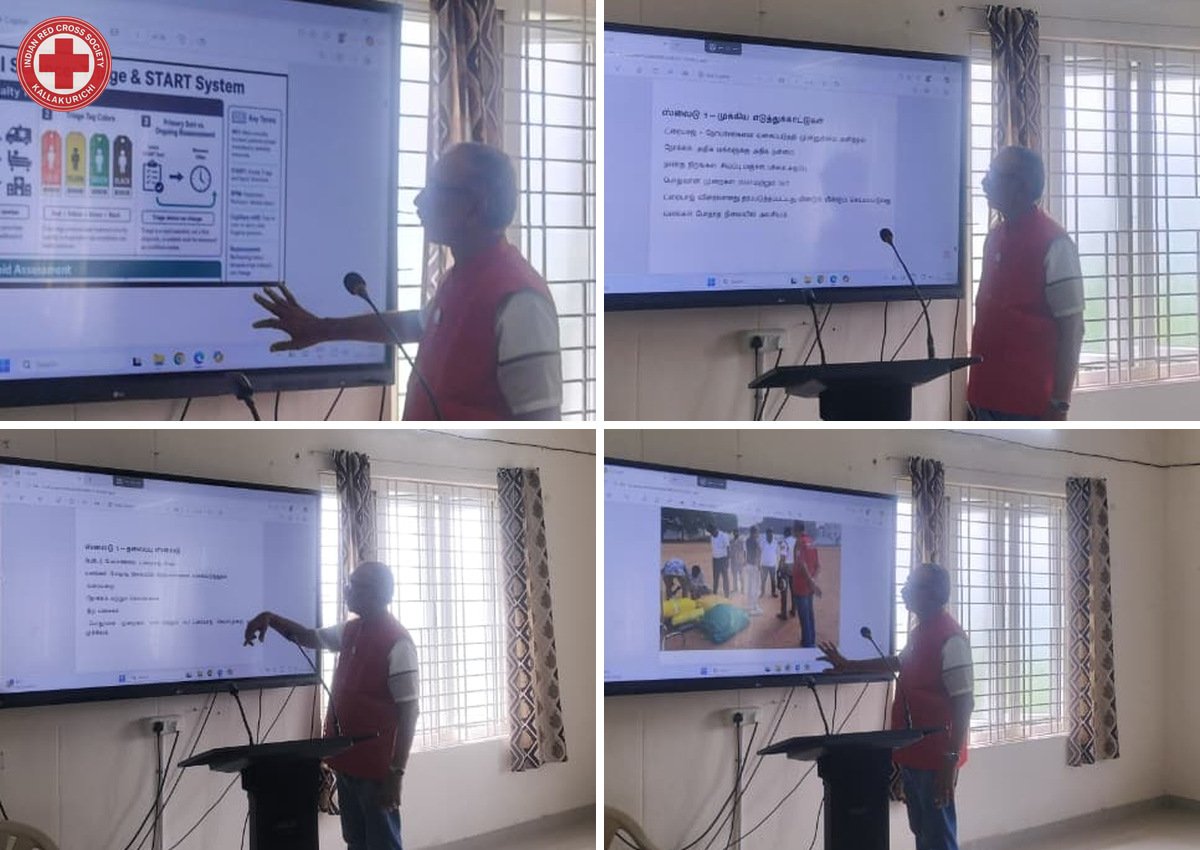
The training introduced the START system, which stands for Simple Triage and Rapid Treatment. Responders quickly check three things, called RPM:
R – Respiration (breathing)
P – Perfusion (blood flow, checked by how fast colour returns after pressing a fingertip)
M – Mental status (whether the person is alert and can follow simple commands)
Each patient then gets a colour tag:
Tag ColourMeaningRedNeeds help immediatelyYellowNeeds help, but can wait a short timeGreenHas minor injuriesBlackCannot be saved, or has died
A patient’s condition can change, so responders must check each person again and again.
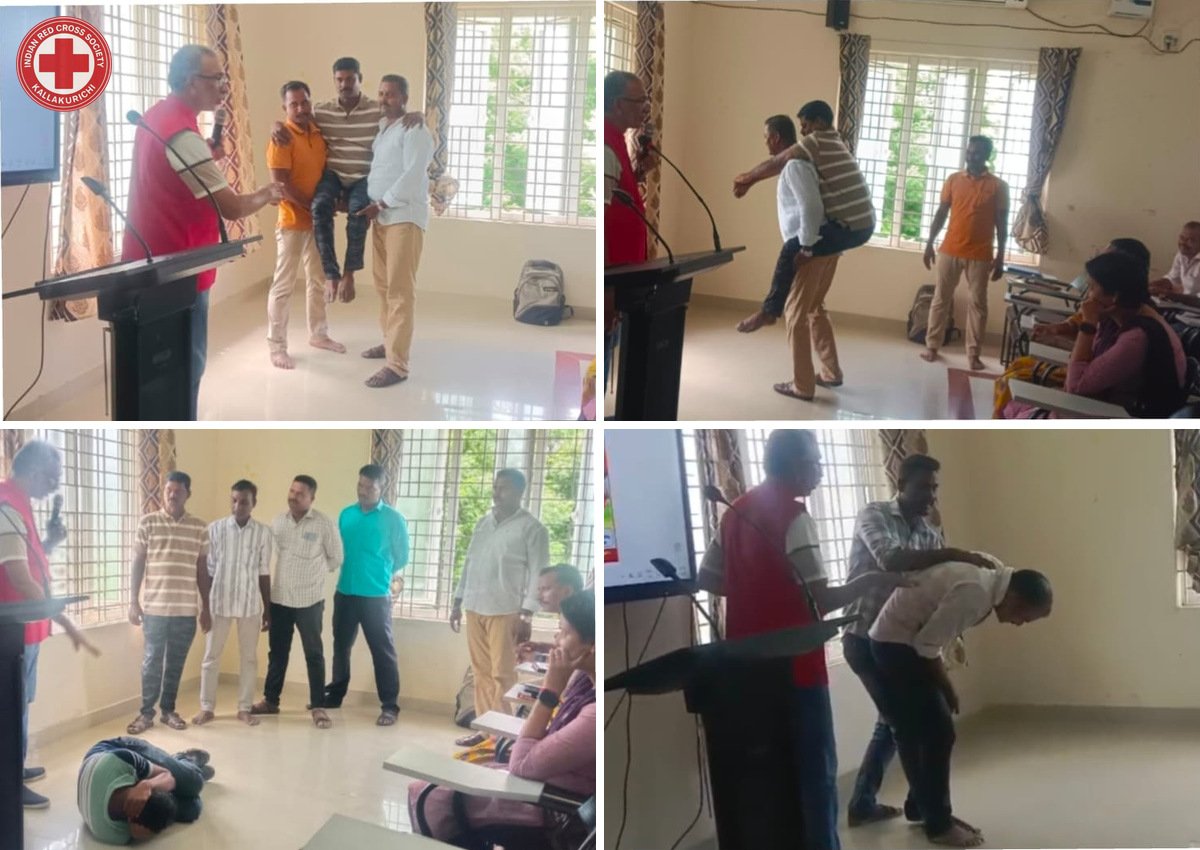
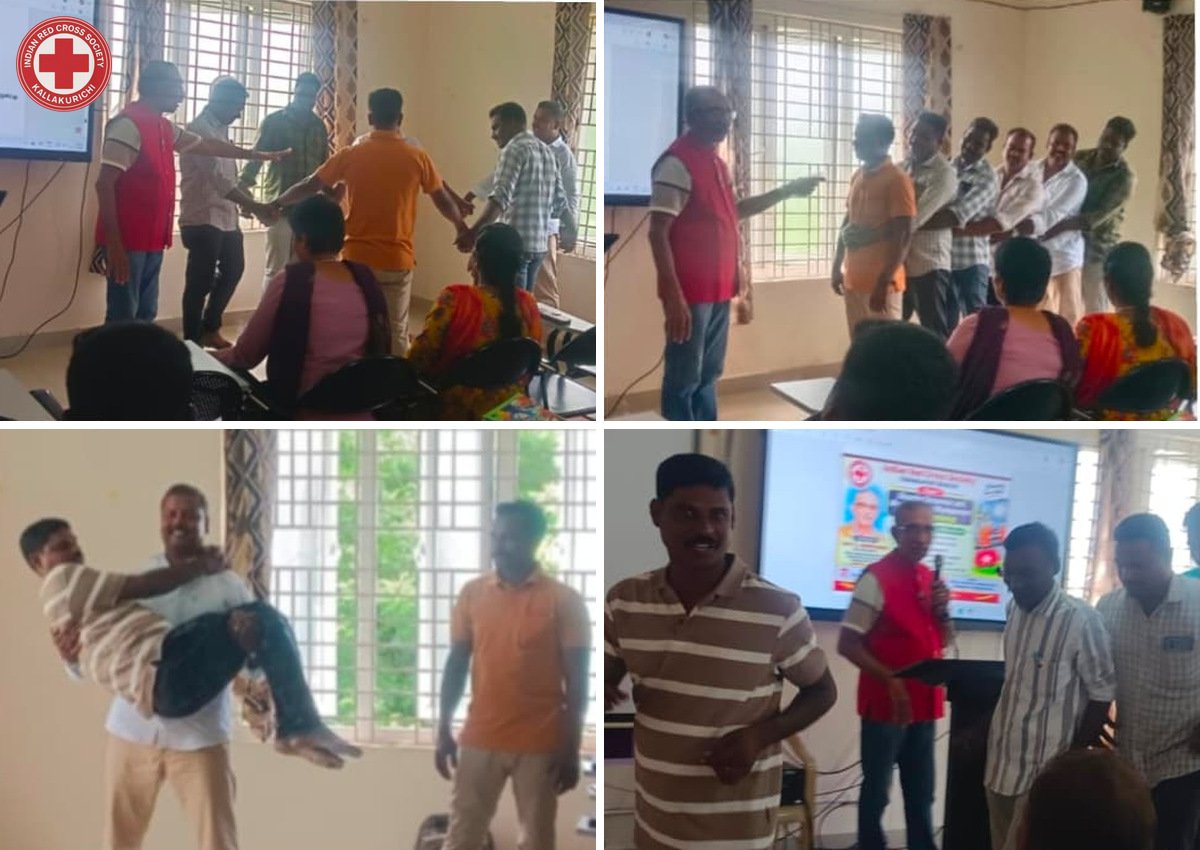
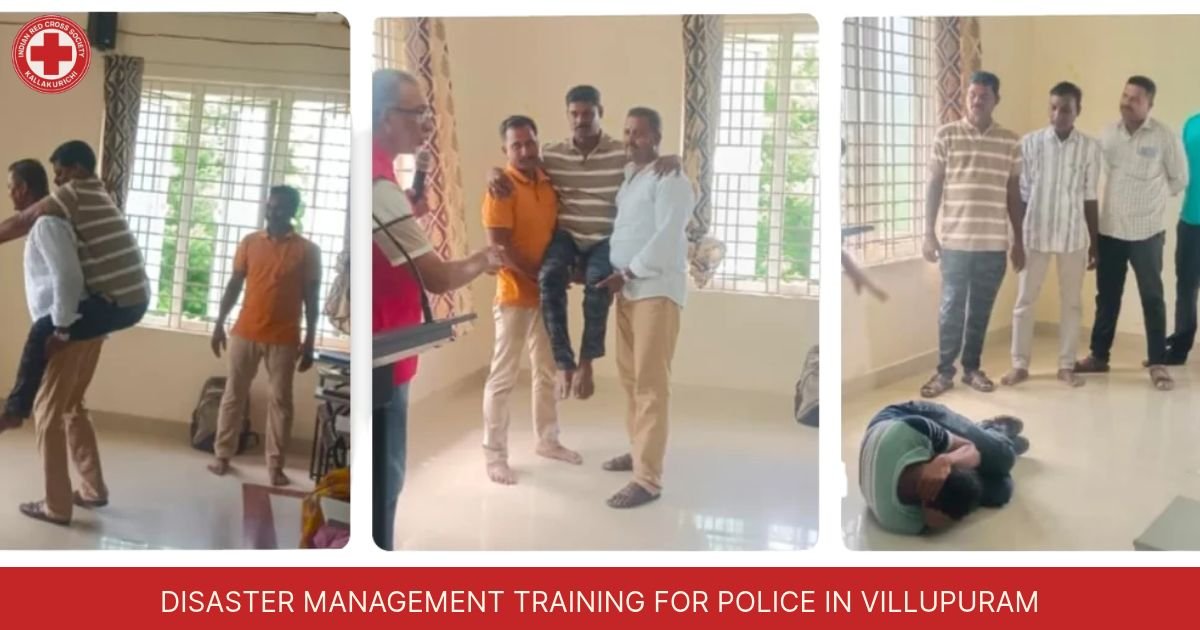
The session was not only theory. Participants practised live demonstrations in the training hall. They learned safe ways to lift and carry an injured person, how to place a person on the floor for care, and how to work together as a team. Practising these steps helps responders remember them under pressure.
The Indian Red Cross Society, Kallakurichi District Branch, thanks the Police In-service Training Centre for its support. We also thank all the police personnel who took part with great interest.
Be prepared. Save lives. Trained responders build stronger, safer communities.
Indian Red Cross Society – Kallakurichi District Branch. Humanity Our Motto.